
Harry Scholefield
I am a designer with 7 years of experience and 6 shipped titles in a Design capacity. In that time I’ve worked on a variety of titles and have gained a wide range of design skills allowing me to support many areas of development.
I have experience both as a lead on a project and also leading smaller feature teams.
Engines
Unity
Unreal Engine 5
Godot
Scripting
C#
Blueprints
GDScript
Project Planning
Jira
Confluence
Time management, scope estimation and tasking
Leadership and Collaboration
Line management
Communication across departments
Championing ideas
Mentoring and support
Projects
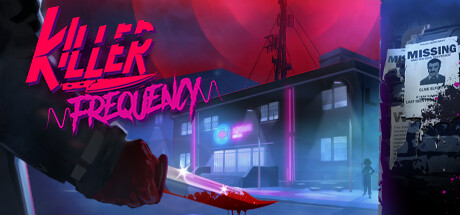
Killer Frequency
First person horror narrative adventure with DJ sim elements
- Steam
- Meta Quest 2
- Playstation
- XBox
Role: Lead Designer
As the lead designer, I was ultimately responsible for the quality and direction of the design of project. This involved working with external writing consultants to craft the narrative, and then internally working with the design team to design the puzzles to then write the initial drafts.
I also worked across all areas of the game from the UI to player controls and interactions. This was especially challenging as everything had to be functional in both “flat screen” formats as well as for VR.
Due to the need for everything to be voiced, I worked closely with production to plan out the work to ensure we hit voice recording deadlines.
Key Responsibilities:
Design direction of the game
Narrative direction
Script writing and editing
Partial UI/UX design
Coordination with other departments on project
Leading a team of two other designers
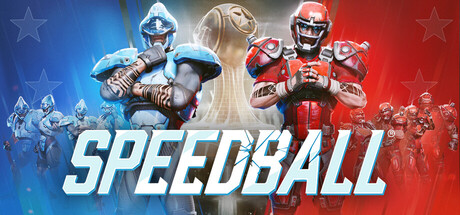
Speedball
Fast paced futuristic violent team sport. Based on the original Speedball games from the Bitmap Brothers
- Steam
- Playstation
- XBox
Role: Match Engine Lead
My role on this project was to ensure that the core gameplay, everything from controls to camera, was working well. I joined the project part way through in development and so had to quickly get up to speed on the direction and the state of the game. I noticed key areas that I felt could be improved in game feel and camera then worked on those as a priority. I then expanded out to cover more areas including the player abilities and working to improve the opposition AI.
For Speedball, two cameras were needed. An “end to end” camera that looked up the arena and a side on camera more similar to what’s found in Fifa etc. Both presented unique challenges.
The “end to end” camera was often cutting off important gameplay, especially along the bottom edge of the screen. To resolve this I designed a dynamic system that used the state of the game, who was in possession etc, to adjust the camera’s tracking to show what was relevant and important.
The side to side camera had issues with depth perception at a distance, notably knowing quickly if players were nearer or further away. The solution to this was to have the camera increase in height the further the action was from the camera, causing a clearer birds eye view to allow player’s relative positioning to really stand out.
My guiding principal when working on the character controller was continuity of movement. I focused on removing any and all pauses in the player movement for jumps, dashes and dives. The intentional contrast to this was tackles and hits where we added hit stop and screen shake to really sell the impact.
Key Responsibilities:
Designing and co-implementing the cameras
Polishing and improving the character controllers
Working with animation and VFX on game feel
Designing and co-implementing multiple systems such as shooting
Working on and providing feedback on the player AI
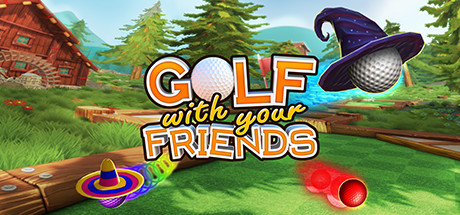
Golf With Your Friends
Online focused minigolf game with powerups and multiple game modes.
- Steam
- Playstation
- XBox
- Switch
Role: Designer
Level design on GWYF required a deep understanding of how the core control mechanics interacted with the levels. Because there was no random chance or other variability in the input system people could shoot identically every time. This meant that the courses either had to introduce that variety or become solvable like a puzzle. We opted for a mixture of these, often leaning away from too many timing based shots and introducing more organic shapes that were harder to predict but could still be read and judged by a skilled player.
Key Responsibilities:
Level design and bespoke mechanics on the Space Station, Worms, Museum, Volcano and Peaceful Pines courses as well as feedback on the Escapists course
UI design and implementation for various areas of the game including the front end menus
Player gamepad controls
Camera design
Role: Designer
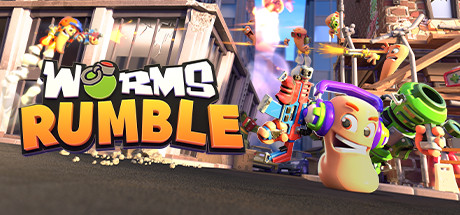
I was brought on to Worms Rumble late in development and my two largest contributions were in designing an arena for post launch support and redesigning the gamepad sensitivity.
For the arena design, I noticed the gameplay felt like a platform fighter such as Smash Bros, so I looked at individual areas as though they were Smash stages, thinking about how battles would flow around the platforms. I then took that approach of flow to the overall arena design, keeping a smooth path that guides players around the larger arena in loops to keep up the high pace of the game and encourage exploration of the entire arena.
I wasn’t happy with the initial implementation for sensitivity as it was functionally just slowing down the aiming. This resulted in player’s being at a disadvantage if they used aim assist. What I instead did was broke down the aiming into two areas: small movements and big movements. Small movements are the ones where sensitivity really helps people to steady their aim. So when moving small amounts, it would move slowly, allowing players to make fine adjustments to aim easier.
Then when it came to big movements, like fully changing direction or tracking a fast moving target it would rapidly track the player’s input at full speed. This allowed players using all sensitivity modes to be competitive.
Key Responsibilities:
Arena design for Spaceport Showdown
Gamepad sensitivity design and general gamepad control feedback
Role: Design Consultant
Key Responsibilities:
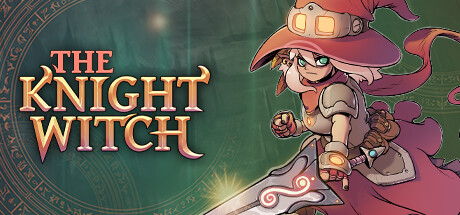
Provided feedback to the external developers on their milestone builds. This involved writing reports and feeding back verbally to the developers.
Role: UI Implementation Support
Key Responsibilities:
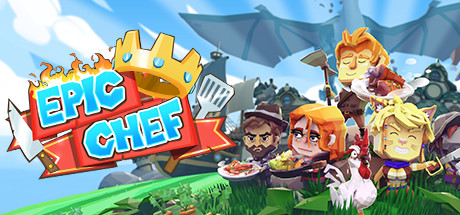
UI design and implementation. This involved supporting the external developers by both designing elements of the UI and implementing designs from the in-house UI/UX designer.


 Harry Scholefield - Portfolio